
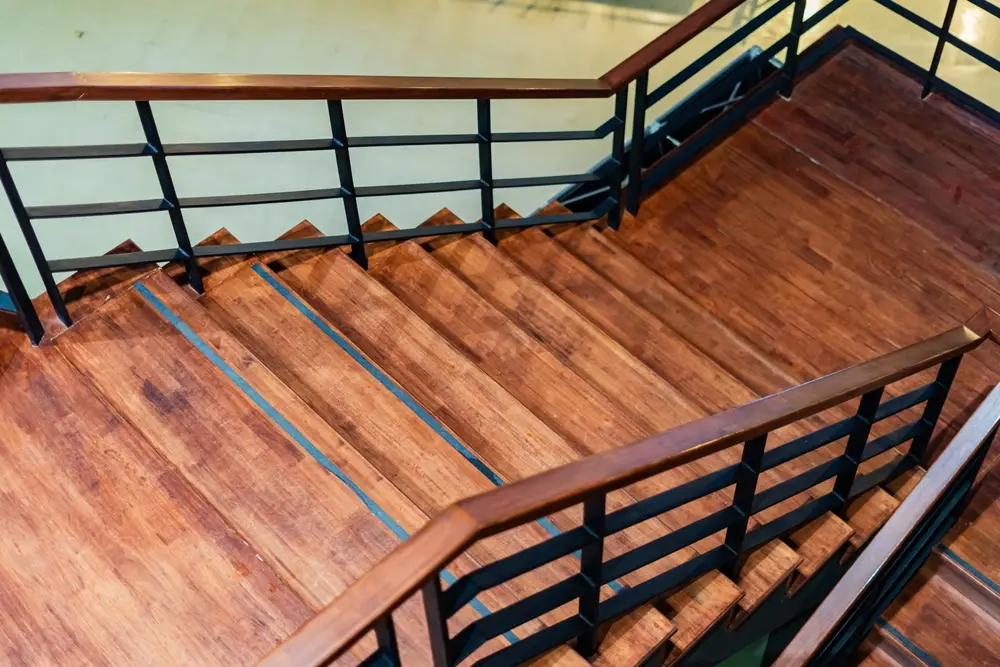
A staircase railing is one of the few things in a home that is judged on looks and safety in the same glance. It frames the space and sets the tone of an entry or a stairwell, and it’s also the thing that keeps a child, a guest, or an aging parent from a serious fall. In Calgary, interior railings also have to satisfy the building code, and the details inspectors look for are precise. Getting them right from the start saves a failed inspection and, more importantly, protects the people who use the stairs every day.
Guards Versus Handrails: Two Different Jobs
The two terms get used interchangeably, but they do different things, and the code treats them separately.
- A guard is the barrier along the open side of a stair, landing, or raised floor that stops someone from falling off the edge.
- A handrail is the graspable rail you hold while climbing or descending, giving support and balance.
A staircase often needs both, and a railing that looks finished but omits a proper graspable handrail is both unsafe and non-compliant. Understanding the distinction is the first step in planning a railing that actually passes.
The Measurements That Matter
Guard height
Guards have to reach a minimum height to be effective, and the required height can differ between a guard along a flight of stairs and one around a landing or balcony. Building that even slightly short is one of the most common reasons an interior guard fails inspection, and it’s not something to eyeball.
Baluster spacing and the four-inch rule
The vertical or horizontal infill between posts, the balusters or spindles, must be spaced so that a small sphere cannot pass through the gap. The intent is straightforward: a child’s head or body should never fit through the opening. This spacing is checked carefully at inspection, and it’s a frequent sticking point on DIY and older railings alike.
A related detail is the climbability of the infill. Horizontal rails that act like a ladder are discouraged because a young child can climb them, so the design of the infill matters as much as the spacing.
Handrail height and grip
A handrail has to sit within a specified height range above the stair nosing and be shaped so a hand can actually wrap around it. Oversized decorative profiles that can’t be gripped don’t satisfy the requirement, even when a separate guard is present.
Materials and Design for Calgary Homes
Interior railings in Calgary range from traditional painted wood to warm stained hardwood, sleek metal pickets, glass panels, and cable infill. Each has trade-offs in cost, maintenance, and the look it creates, but every one of them has to meet the same safety requirements underneath the styling.
Glass and cable systems, popular for keeping sightlines open in a modern home, carry their own engineering and spacing considerations, which is why they benefit from experienced installation. Envirotech Renovation works through the design and the code requirements together, so the railing a homeowner pictures is also the railing that will pass. The same careful approach our railing installation team brings to exterior guards and handrails applies indoors, where the stakes for everyday safety are just as high.
Why Proper Installation Matters
A railing is only as safe as its anchoring. Posts have to be fastened into solid structure, not just drywall or a single tread, so the whole assembly can take real force without loosening. This is where railing work overlaps with the framing and finish carpentry behind it, and it’s often folded into a larger interior renovation project so the structure, the stairs, and the railing all come together cleanly. Envirotech Renovation handles that coordination so the finished railing is solid, compliant, and built to last.
Frequently Asked Questions
When is a handrail required on interior stairs?
Most staircases with more than a couple of risers require a graspable handrail, and open sides typically require a guard as well. The exact triggers depend on the configuration, so it’s best to confirm with a contractor familiar with the local code.
How much space is allowed between balusters?
The gap must be small enough that a four-inch sphere cannot pass through, which keeps a child from slipping through or getting caught. This spacing is checked closely during inspection.
Can I use a horizontal railing design indoors?
Horizontal infill is possible but is scrutinized because it can be climbed like a ladder by young children. The design has to be executed so it doesn’t create a climbing hazard, which is where professional guidance helps.
What’s the difference between a guard and a handrail?
A guard is the barrier that prevents a fall off an open edge; a handrail is the graspable rail you hold for support. A staircase frequently needs both, and they have separate requirements.
Do interior railings need to be anchored into framing?
Yes. Posts must fasten into solid structure so the railing can withstand real force. Anchoring only into drywall or a single tread is a common failure point that proper installation avoids.
