
If your first steps out of bed feel like walking on broken glass, you’re not alone — and there’s a very specific reason it happens right when you wake up.
That sharp, stabbing pain in the heel is one of the most recognizable signs of plantar fasciitis, and the morning timing isn’t random. While you sleep, your foot settles into a relaxed, slightly pointed position. In that position, the plantar fascia — the thick band of connective tissue running along the bottom of your foot — tightens up and begins attempting to repair the small micro-tears accumulated from the day before. The moment you stand and put weight through your foot, that contracted tissue is suddenly forced to stretch under your full body weight. Those first few steps are when it protests the loudest.
After a few minutes of moving around, the tissue warms up, circulation improves, and the pain often backs off. That can feel like relief — but it isn’t healing. The same cycle repeats every time the fascia tightens during rest, which is why the pain tends to return after long periods of sitting, or flares up again toward the end of a day spent on your feet.
What Makes It Worse
Not everyone experiences morning heel pain the same way, but certain factors tend to amplify it. Tight calf muscles and a stiff Achilles tendon increase the tension pulling on the heel around the clock — including overnight. Walking barefoot on hard floors first thing in the morning removes any cushioning at the exact moment the tissue is most vulnerable. Flat feet, high arches, long hours standing at work, and worn-out footwear all add to the load the plantar fascia is absorbing with every step.
The longer these factors go unaddressed, the more the tissue breaks down — and the more intense those mornings become.
This Isn’t Something You Have to Live With
Morning heel pain that follows this pattern responds very well to the right treatment. The key is addressing not just the inflamed tissue, but the underlying mechanics keeping it inflamed in the first place.
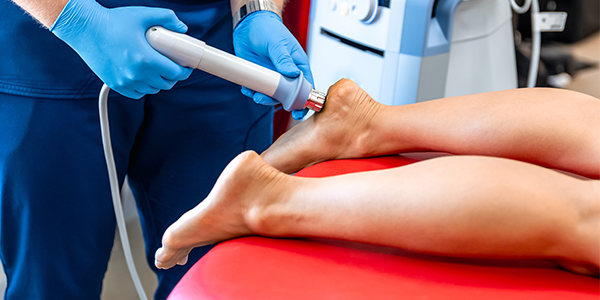
At Osteo Health Calgary, we treat plantar fasciitis with a combined approach — Osteopathy, Massage Therapy, Acupuncture, and Shockwave Therapy — each targeting a different layer of the problem. Together they repair the damaged tissue, release the structural tension driving it, and restore the movement patterns that allow the foot to function without constant strain. Most clients notice a genuine shift in their symptoms within the first one to two sessions.
Waking up in pain every morning isn’t just uncomfortable — it’s a signal that something needs attention. The sooner it’s properly treated, the faster and more completely it resolves.
👉 Book your appointment at Osteo Health Calgary.
Frequently Asked Questions
Q1: Why does the pain ease up after I walk around for a bit? Movement increases blood flow and gradually encourages the plantar fascia to loosen and warm up. That easing of pain is the tissue becoming more pliable — not a sign that it’s healed. As soon as the fascia tightens again during your next period of rest, the cycle repeats and the pain returns with your next set of first steps.
Q2: Will morning heel pain go away on its own? Very mild cases caught early can sometimes settle with rest, but most plantar fasciitis requires proper treatment to resolve. Without addressing the root cause — tight calves, poor foot mechanics, chronic micro-tearing, inflammation — the pain tends to persist for months or years and can eventually lead to heel spur formation. Waiting generally makes it harder, not easier, to treat.
Q3: How many treatments does it take to feel better? At Osteo Health we recommend a structured program of 4–6 weekly treatments for lasting results. Most clients experience a noticeable reduction in pain after just one or two sessions, with continued improvement in mobility and function over the following weeks.
Q4: Is plantar fasciitis treatment covered by insurance? In most cases, yes. Treatments at Osteo Health are billed under Massage Therapy, Osteopathy, or Acupuncture — all of which are covered under most extended health benefit plans. Shockwave Therapy is included at no extra cost alongside these treatments. We recommend checking your specific plan for the details of your coverage.
